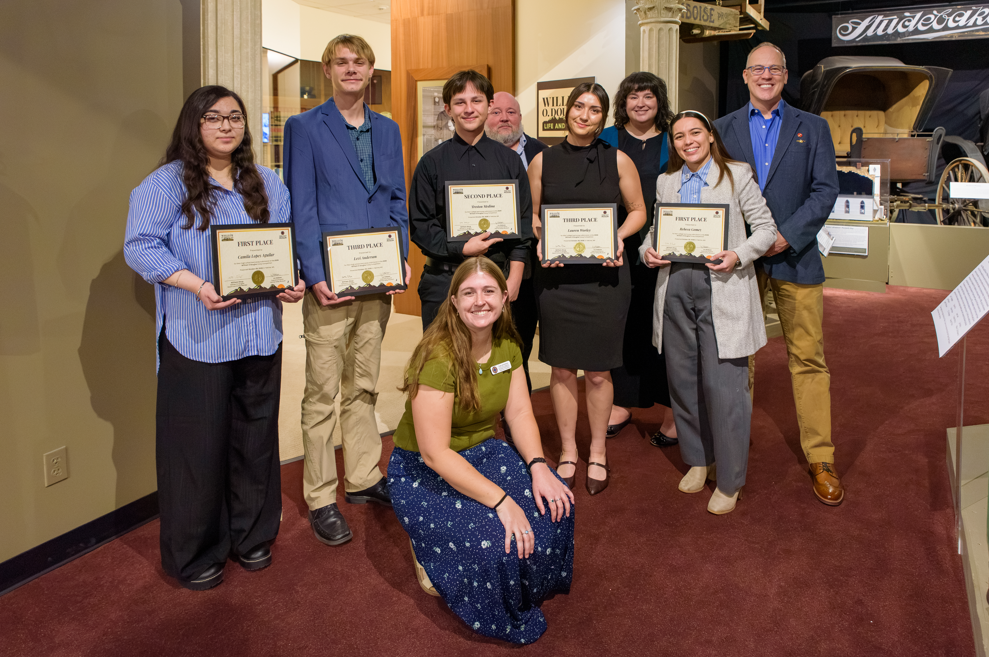
2026 Essay Contest Winners
William O. Douglas Essay Contest Prompt - 2026
What is the significance of the Equal Protection Clause for the practice of democracy in American history and contemporary society?
The Equal Protection Clause of the 14th Amendment of the Constitution fundamentally impacts American law and society. It says that no State shall “deny to any person within its jurisdiction equal protection under the laws.” Since its ratification in 1868, the clause has been crucial to decisions addressing civil rights, racial segregation, and access to education.
William O. Douglas wrote in Harper v Virginia Board of Elections that voter eligibility that depends on a fee violated the Equal Protection Clause. This is because wealth or ability to pay a fee is unrelated to a citizen’s ability to participate intelligently in the election process.
This is just one case. Other issues continue to come before the Supreme Court. We are looking for a well thought out essay that talks about the significance of the Equal Protection Clause and how it is important in the practice of democracy in American history and in contemporary society.
Use reasoning to support your thesis with historical examples. Give thoughtful interpretation of what the Protection Clause of the 14th Amendment intends. Tell us why the Clause remains the cornerstone of American legal principles.
COLLEGE LEVEL WINNERS
Second Place: "Legacy: Public Perception and the Equal Protection Clause" by Treston Medina
Third Place: "Advancing the Promise of Equal Protection" by Lauren Worley
HIGH SCHOOL LEVEL WINNERS
Second Place: "The Lasting Power of Equal Protection" by Annaka Yockey
Third Place: "Democracy Without Representation" by Levi Anderson